CARL NIELSEN
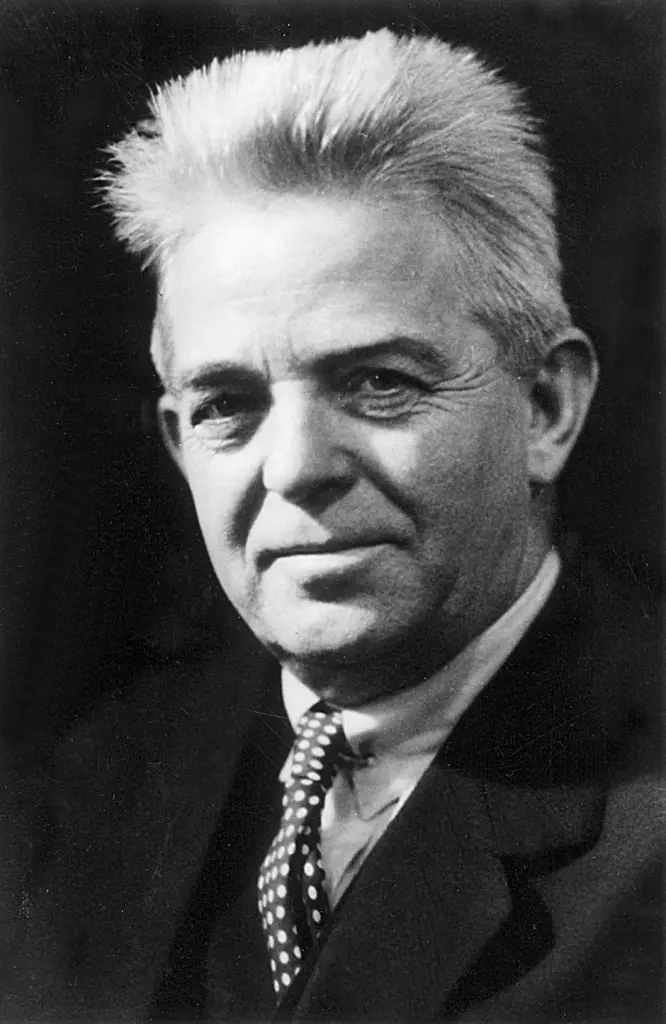
1865-1931
– the composer with the warm songs of life and the cold sounds of death
All Danes have an opinion about the music of Carl Nielsen: Either we don’t like it, or else we just love his many songs. Or perhaps we find his six symphonies too knotty. And can we really call his particular tone “Danish” in any true sense? Surely no composer in the world has remained so controversial so long after his death.
Carl Nielsen’s own life also went from one extreme to another: Consider his path from an impoverished upbringing in Sortelung on Funen to the role of nationally-renowned composer and director of the Academy.
Or consider his never-dull marriage to the sculptor Anne Marie Carl-Nielsen – increasingly recognised as an artist fully on a par with him. Neither is it really possible to put a label on his music: It is neither Late Romantic nor Neoclassical, neither very clever nor very amateurish, neither particularly elitist nor particularly popular. Carl Nielsen himself did not wish his music to be labelled as ‘Danish-minded’ music, and in fact disliked all talk of music as anything other than music in its own right. And his songs and hymns are thus a microcosm of it all: Until recently, ordinary Danes probably knew dozens of them. People have delighted in Irmelin Rose and shuddered over Sænk kun dit hoved (‘Just bow your head’) for more than a century. You get all the most important aspects of Carl Nielsen’s art in even a very short song with the same music in all the verses: his small steps in the melody, his varied harmonies on the piano, his characteristic joy in the music here and now. Carl Nielsen will even sometimes allow the music to end in a “wrong” key – simply because he is concerned with the expression from note to note, and less so with the form.
Foreigners don’t always understand the beauty of his songs. They are delighted by his orchestral music, but disappointed in his pieces for voice and piano. Despite the close relationship Danes have with the songs, they do not always sound like anything special to others.
The explanation is probably once again our dislike of pathos: Carl Nielsen simply did not wish to set his delights and his horrors to melodramatic music. He chose his ‘small’ solutions with care, and from there found his way to the understated side of Danish culture.
Søren Schauser
| Collection | Op | No | Title | Poet |
|---|---|---|---|---|
| Musik til 5 digte af J.P.Jacobsen | 4 | 1 | Solnedgang | Jens Peter Jacobsen |
| Musik til 5 digte af J.P.Jacobsen | 4 | 2 | I seraillets have | Jens Peter Jacobsen |
| Musik til 5 digte af J.P.Jacobsen | 4 | 3 | Til Asali | Jens Peter Jacobsen |
| Musik til 5 digte af J.P.Jacobsen | 4 | 4 | Irmelin Rose | Jens Peter Jacobsen |
| Musik til 5 digte af J.P.Jacobsen | 4 | 5 | Har Dagen sanket al sin Sorg | Jens Peter Jacobsen |
| 6 sange til tekster af Ludvig Holstein | 10 | 1 | Æbleblomst | Ludvig Holstein |
| 6 sange til tekster af Ludvig Holstein | 10 | 3 | Sommersang | Ludvig Holstein |
| 6 sange til tekster af Ludvig Holstein | 10 | 5 | I Aften | Ludvig Holstein |
| Strofiske Sange | 21 | 4 | Sænk kun dit hoved du blomst | Johannes Jørgensen |
| Fynsk Forår | 42 | 1 | Den milde Dag er lys og lang | Aage Berntsen |
| Fynsk Forår | 42 | 2 | Den blinde spillemand | Aage Berntsen |